


Generated by AI

“Ali Ayaghi” in Buzovna: A Shrine, a Legend, and the Forgotten History of Absheron
History on the Absheron Peninsula rarely lies on the surface. It hides beneath later buildings and survives in the names of neighbourhoods, ancient cemeteries, wells, and stones that people visited long before written records appeared.
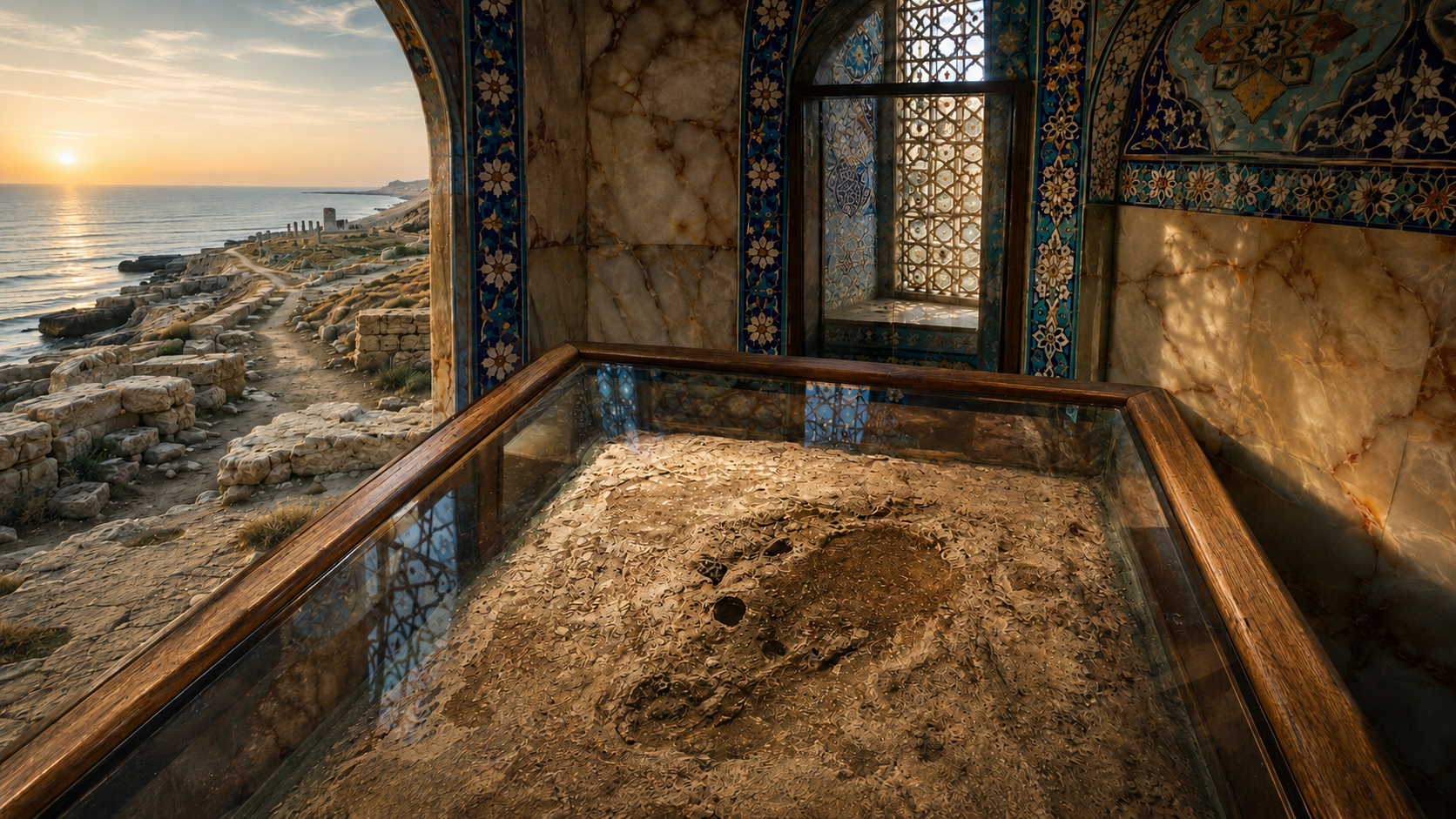
One such place is located in the settlement of Buzovna. It is known as “Ali Ayaghi” — “Ali’s Footprint.”
Today, it is a well-known pilgrimage site associated with Ali ibn Abi Talib — the cousin and son-in-law of the Prophet Muhammad, the fourth Rightly Guided Caliph in the Sunni tradition, and the first Imam in Shia Islam. At the centre of the shrine lies a stone with a hollow that believers regard as the imprint of Ali’s foot.
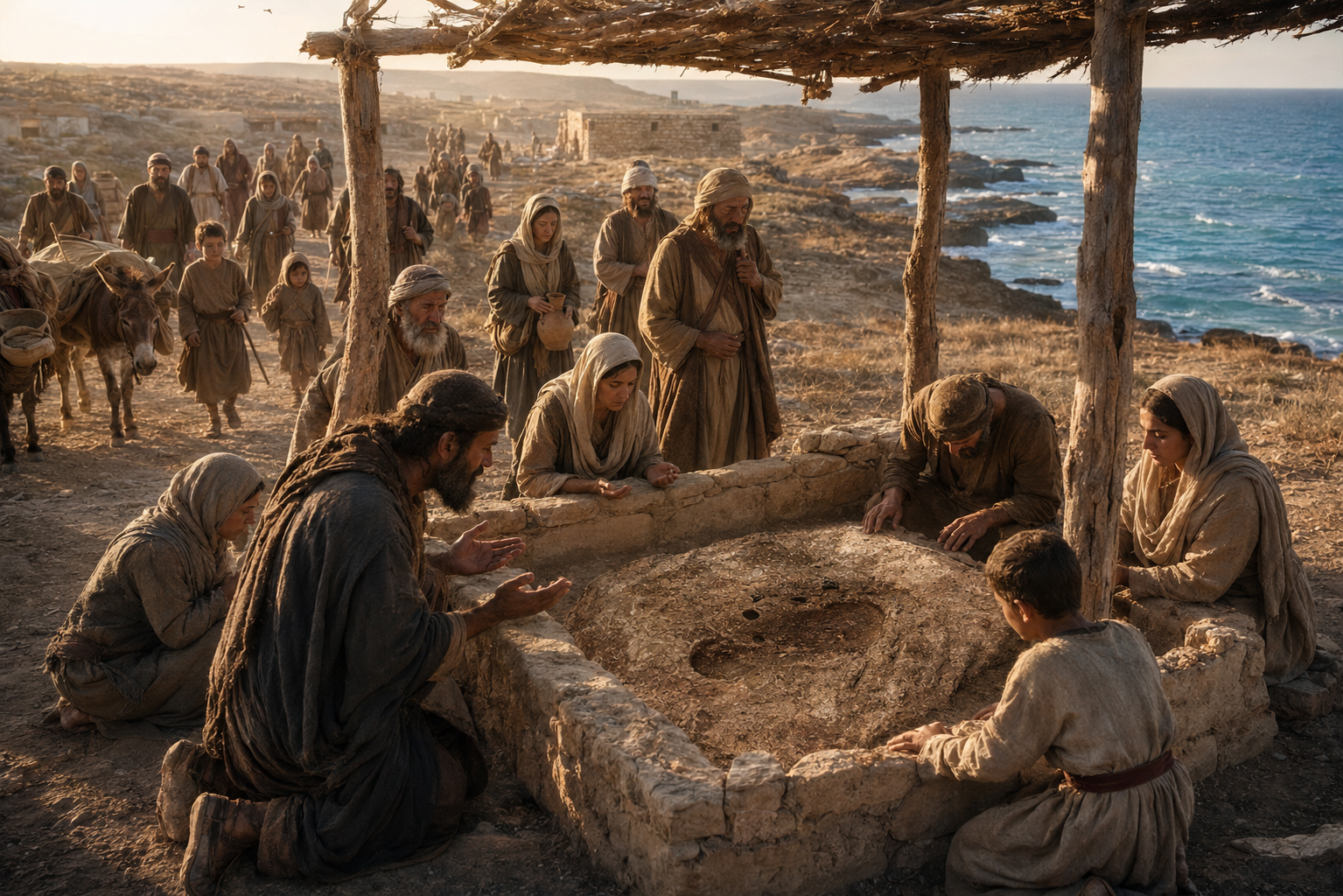
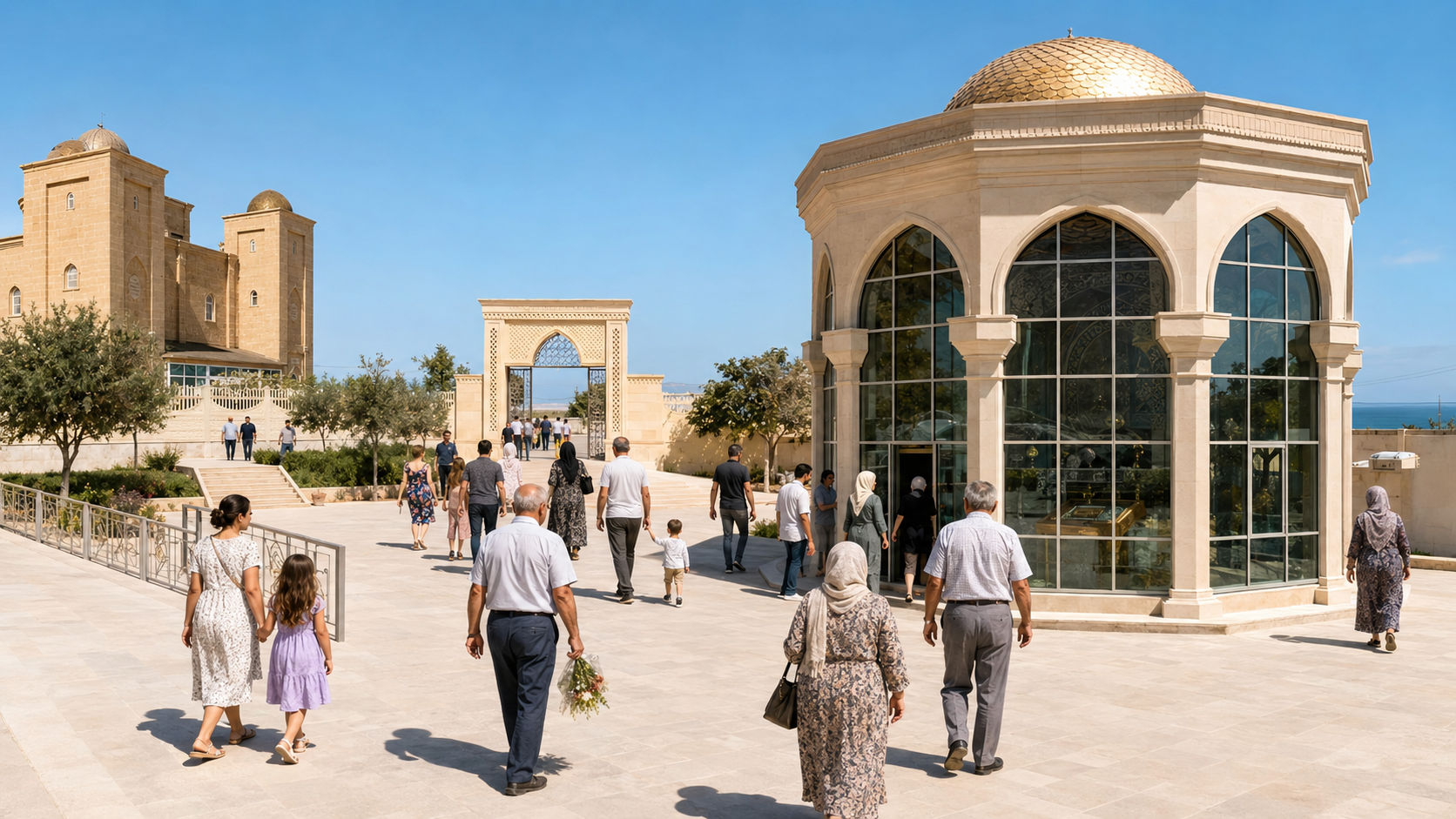
People come here with prayers and petitions, seeking healing, making vows, and distributing charitable offerings. For many residents of Buzovna, Ali Ayaghi is more than a religious site. It is part of their family memory — a place visited by their parents, grandparents, and great-grandparents.
Yet if we move beyond the legend and attempt to reconstruct the shrine’s history, a far more complex picture emerges.
Could Ali Have Visited Buzovna?
According to local tradition, Ali passed through this area, stood upon the stone, and left his footprint on it. This imprint is said to have made the place an object of veneration.
Historical sources, however, do not confirm that Ali ever visited Absheron. Early Arab chronicles, Shia texts, and medieval biographies contain no information about him travelling to the territory of present-day Azerbaijan.
Ali ibn Abi Talib died in Kufa in 661. Arab expansion into the South Caucasus took place during the seventh century, but the military campaigns and consolidation of Arab rule in the region cannot be linked to Ali’s personal presence.
The story of his visit to Buzovna should therefore be understood not as an established biographical fact, but as a religious tradition.
The absence of historical confirmation does not, however, make the site insignificant. On the contrary, it raises another, perhaps more important question: why did this particular stone remain an object of veneration for centuries?
A Shrine Older Than Its Legend
Azerbaijani historian Sara Ashurbeyli regarded Ali Ayaghi as one of the ancient objects of veneration that survived on Absheron after the spread of Islam. She noted that alongside the worship of sacred trees, the peninsula also preserved the veneration of stones — particularly the Ali Ayaghi stone in Buzovna.
According to her interpretation, Absheron’s ancient shrines did not necessarily disappear after the population adopted Islam. Between the eighth and tenth centuries, they were gradually incorporated into the new religious system and given Muslim names. An earlier sacred site could therefore have become associated with Ali over time. Ashurbeyli discusses this process in her study The History of the City of Baku.
Similar transformations occurred across many parts of the Caucasus, Iran, Anatolia, and Central Asia. A change of religion did not always mean the destruction of an earlier sacred landscape. People continued visiting the same springs, stones, caves, and trees, but began explaining their sacred nature through the images and figures of the new faith.
The stone remained the same. The story told about it changed.
Something similar may have happened in Buzovna.
Pre-Islamic Absheron
Long before the spread of Islam, Absheron was home to a complex range of religious beliefs. Fire, stone, water, caves, and natural elevations were regarded as sources of special power.
Natural gas vents and spontaneously burning flames contributed to the development of Zoroastrian and other pre-Islamic cults. At the same time, the local population venerated particular trees, springs, and unusual rock formations.
These traditions cannot be reduced exclusively to Zoroastrianism. Ancient Absheron’s religious landscape was formed by different beliefs that may have coexisted or replaced one another over time.
Buzovna occupied a special place within this landscape. Ancient settlements, old cemeteries, wells, stone structures, and shrines were located in and around the village. Its proximity to the sea connected it to coastal routes used by fishermen, merchants, pilgrims, and travellers.
The Ali Ayaghi stone may have been venerated before it became associated with Ali. Proving this today, however, is impossible. As far as is known, no systematic archaeological investigation has been conducted directly beneath the modern complex.
We do not know whether a Bronze Age sanctuary, a Zoroastrian cult site, an early medieval shrine, or a memorial to a local sheikh once stood here. All these possibilities remain hypotheses.
Why Ali’s Name?
After the Islamisation of Absheron, ancient sacred sites required new religious explanations. Ali’s name was ideally suited to this purpose.
In the Shia tradition, Ali embodies justice, spiritual strength, courage, and closeness to the Prophet Muhammad. In popular religion, he became not only a historical figure but also a protector, a patron of travellers, and a person whose presence could sanctify a place.
This gave rise to stories such as:
Ali passed through here;
Ali prayed here;
Ali stopped here to rest;
Ali left his footprint here.
Shrines associated with supposed footprints of Ali are not unique to Azerbaijan. They are known in Iran, Iraq, Türkiye, Afghanistan, Pakistan, India, and Central Asia. Most appeared centuries after Ali’s lifetime.
These sites tell us less about the routes travelled by the historical Ali than about the spread of his veneration and the desire of local communities to connect their own sacred spaces with one of Islam’s central figures.
In this sense, Ali Ayaghi is part of a much broader religious geography.
The Stone Matters More Than the Building
The modern visitor sees an established religious complex. But the principal object is not the building. It is the stone.
The stone is probably the shrine’s oldest element. Buildings may have been reconstructed, expanded, or destroyed. The purpose of the complex may have changed. Yet the stone remained in place, preserving the belief that this particular point differed from the surrounding space.
The veneration of footprints has an ancient history and occurs in various religions. A mark left on stone is perceived as evidence that a holy person touched the earthly world. It connects a legend with a material object that can be seen and touched.
For a pilgrim, therefore, the question of whether Ali was physically present on Absheron is not always decisive. The shrine lives not according to the rules of academic historiography, but through the faith of many generations.
For a historian, the stone is significant for a different reason. It may offer evidence of the continuity of a sacred place that has existed for centuries, perhaps even millennia.
A Shrine Beside the Road and the Sea
There is another possible explanation for the origins of Ali Ayaghi.
During the Middle Ages, shrines often emerged near roads, mountain passes, harbours, and places where travellers stopped. Before embarking on dangerous journeys, people prayed for protection. After returning safely, they brought offerings in gratitude.
Buzovna stood on the Caspian coast and was once much more closely connected to the sea than its modern urban landscape might suggest. Fishermen set out from here, small vessels moved along the shoreline, and coastal routes linked the settlements of Absheron.
Ali Ayaghi may originally have been a roadside or coastal shrine where people prayed before setting out to sea. It may later have become associated with a revered sheikh, a dervish, or Ali himself.
Such transformations were not unusual. Over time, the grave of a local holy man could acquire a new legend, while the person’s original name could be replaced by that of a prominent religious figure. Sometimes the original burial was forgotten, but the place retained its sacred status.
There is currently no documentary evidence to confirm this interpretation. Nevertheless, Buzovna’s location and the known history of pilgrimage sites along the Caspian coast make it worthy of consideration.
A Place That Remembers
In large cities, the past often disappears together with an old building. In Buzovna, it sometimes survives in another form — in a stone, a name, or a path that people continue to follow without knowing who first walked along it.
Ali may never have set foot on this shore. The hollow in the stone may have formed naturally. Yet for generations, local residents have seen a footprint there — a sign of the sacred within everyday life.
For a believer, it is Ali’s footprint.
For a historian, it is a trace of Absheron’s religious transformation.
For Buzovna, it is part of its own biography, one that has yet to be fully read.
Ali Ayaghi offers no simple answer to the question of its origins. That is precisely why it deserves to be preserved and studied. Sometimes the significance of a monument lies not in confirming a familiar history, but in compelling us to search for a history that has yet to be discovered.
To be continued.


Social
-
Looking down on the northern Absheron coast, it is difficult not to notice a pattern. Azerbaijan's most restricted government compound — the presidential residence in Zagulba — is located neither in central Baku, nor amid the oilfields, nor even on...
-
The Road from Absolutism to Constitutional Government The Iranian Constitutional Movement (Mashruteh), which unfolded in the early twentieth century, is regarded as one of the most important turning points in the political modernization of the...
-
Higher education continues to improve a person’s chances of finding work. However, the gap between academic programmes and employers’ needs, the lack of practical experience and the limited number of quality jobs make it difficult for young...
-
Construction of a 300-metre pipeline designed to drain groundwater in the centre of Buzovna, a settlement in Baku, has continued for about three months — roughly twice the technically justified timeframe. Hydraulic tests have already been completed,...


Leave a review