


Ukraine Online Telegram Channel/Anadolu via Getty Images

Systematic Ukrainian drone strikes on Wildberries warehouse complexes have marked a new direction in Kyiv’s campaign deep inside Russia. While earlier attacks mainly targeted oil refineries, fuel depots, defence plants, airfields and transport infrastructure, they are now extending to the distribution network of Russia’s largest online marketplace.
Ukraine is not attacking Wildberries as a digital platform but its large logistics centres. These facilities hold goods belonging to thousands of sellers and process millions of orders. Disabling a single complex can disrupt deliveries across several regions and cause losses to businesses, carriers, insurers, banks and consumers.
Kyiv’s presumed calculation may be to inflict military, economic and psychological damage on Russia simultaneously. There is, however, no independent evidence showing that every warehouse attacked was being used by the Russian armed forces.
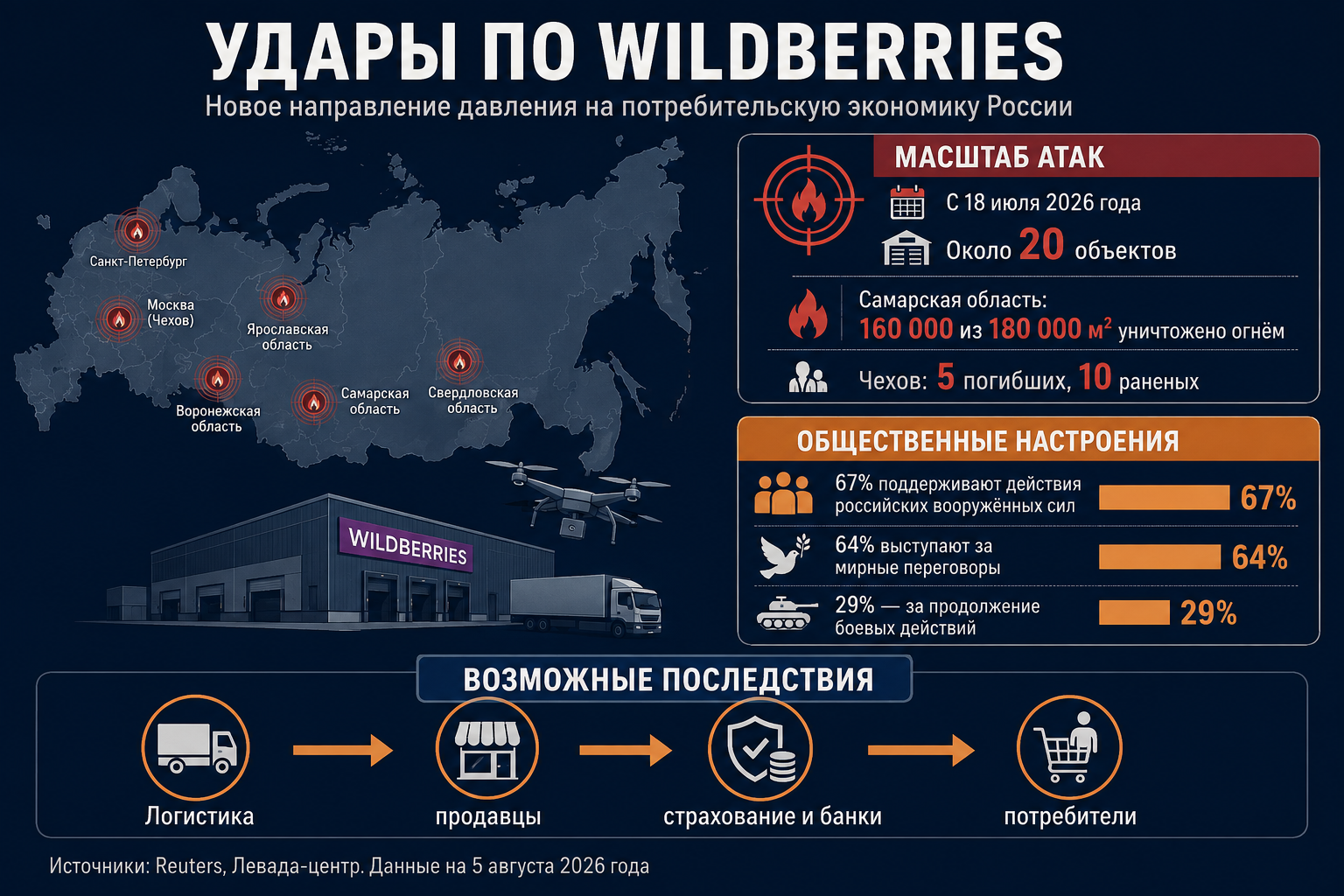
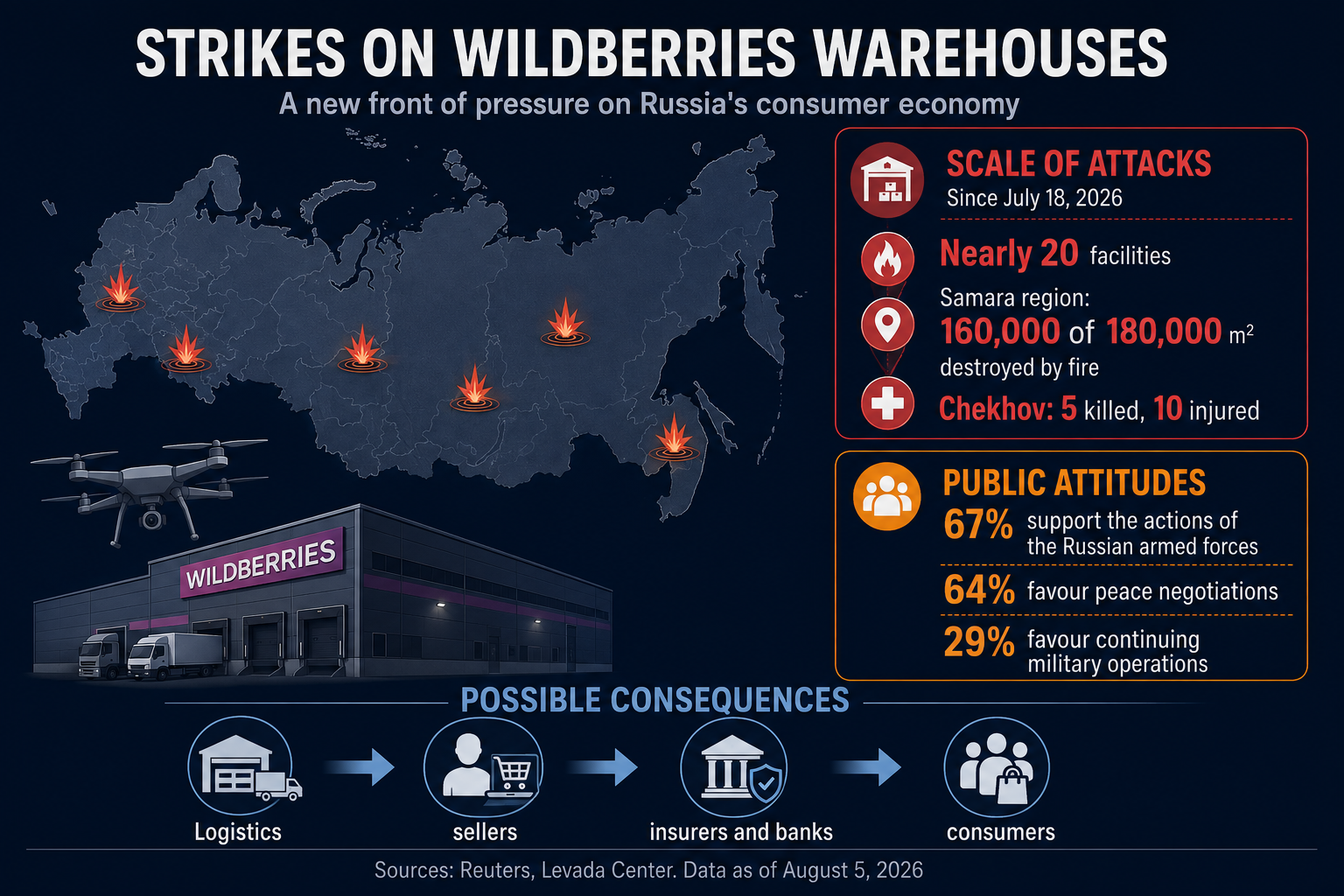
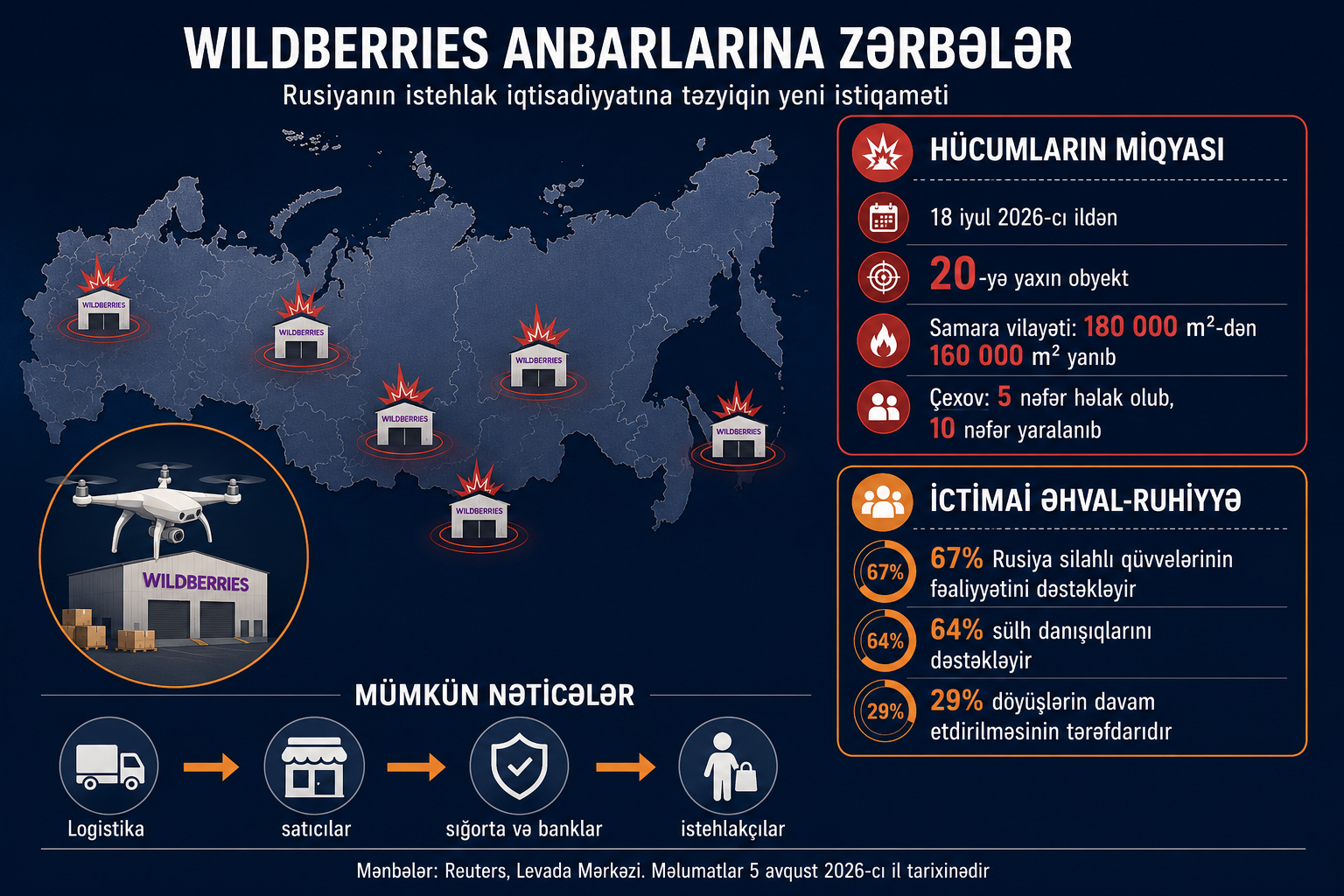
Nearly 20 facilities in several weeks
Ukrainian drones have attacked nearly 20 Wildberries facilities across Russia since July 18, 2026, Reuters reported. The sequence and geographical spread of the strikes suggest that they represent a distinct part of Ukraine’s campaign rather than isolated incidents.
One of the most destructive attacks hit a complex in the Samara region. A fire destroyed 160,000 square metres of the 180,000-square-metre warehouse. Russian officials said the goods stored there had been lost.
Facilities in the Leningrad and Tver regions were struck overnight on August 4. Five people were killed and 10 injured in an attack on an industrial area in Chekhov, in the Moscow region. Authorities reported damage to a warehouse, an electricity substation and another building but did not specify whether the facility where the deaths occurred belonged to Wildberries.
The company has not disclosed its total losses. Wildberries founder and chief executive Tatyana Kim described the strikes as “acts of terrorism” directed against civilian businesses. She said the company sold ordinary consumer products also available on other international platforms and argued that the attacks sought to destabilise the situation and spread panic among Russians.
Wildberries also said it was restructuring its logistics network and working with the Russian authorities to support affected sellers.
Military logistics or civilian commerce?
Ukrainian military sources say Wildberries is used as a logistics hub for supplying drone components and other military or dual-use products. Under this interpretation, the warehouses form part of a broader supply system serving the Russian armed forces.
However, the presence of dual-use products in a commercial warehouse does not automatically turn the entire complex into a military objective. It would be necessary to establish whether the facility made an effective contribution to military action and whether its destruction offered a definite military advantage.
If a warehouse primarily served civilian sellers and customers, the legality of striking it raises serious questions. It is currently impossible to verify independently the contents and intended use of goods held at every facility attacked.
Claims that the warehouses were used for military purposes therefore remain the Ukrainian side’s position. Wildberries insists that its activities are entirely civilian.
Economic effects extend beyond the company
The consequences of the attacks reach far beyond Wildberries. The destruction of inventories could deprive small sellers of working capital, delay orders and increase spending on insurance, security, fire protection and alternative logistics routes.
Sergei Semko, a senior analyst at Data Insight, estimated that Wildberries sellers may have lost between 215 billion and 280 billion roubles in the series of strikes. The company has not confirmed this estimate, which depends on the volume of goods held in the warehouses at the time. Nevertheless, it indicates the potential scale of the losses facing small and medium-sized businesses. Meduza, citing Forbes
Maxim Leshchev, chief executive of Meta Group, earlier estimated that rebuilding two damaged warehouses in Elektrostal and Kotovsk alone could cost as much as 35.8 billion roubles. His calculation did not include the value of the goods destroyed.
Russian authorities have offered a more restrained assessment. Alexander Maslennikov, deputy secretary of Russia’s Security Council, described the damage to the economy as a whole as “symbolic”. In his view, the main purpose of the attacks is not to destroy Russia’s e-commerce market but to destabilise the domestic environment.
These assessments reflect two different levels of impact. The loss of several warehouses may have only a limited effect on the Russian economy as a whole. For an individual seller, however, the destruction of an entire shipment could mean the loss of the business.
“Long-range sanctions”
Kyiv describes its deep strikes inside Russia as “long-range sanctions”. Their purpose is to physically reduce Russia’s economic capacity and increase the cost of continuing the war.
Warehouse attacks offer Ukraine several potential advantages. Such facilities are large, clearly visible and contain significant quantities of combustible materials, including packaging, textiles, household chemicals and electronics. Even relatively limited initial damage can start a fire capable of destroying an entire complex.
At the same time, Russia must decide which facilities to protect with air defences. Defending numerous warehouses, industrial sites and energy installations requires additional air-defence systems and electronic warfare equipment that might otherwise be deployed to protect military infrastructure.
Bringing the war into everyday life
Kyiv’s political calculation probably extends beyond the value of the goods destroyed. The attacks make the war tangible to people living hundreds or thousands of kilometres from the front.
Supply disruptions, cancelled orders, business losses and possible price increases could weaken the sense of domestic stability. The strikes also demonstrate that distance from the Ukrainian border no longer guarantees the safety of major Russian facilities.
The possible objective is to increase the social cost of the war through material losses and a sense of vulnerability, thereby placing greater pressure on the Kremlin. It would, however, be premature to claim that Kyiv is deliberately trying to spread panic. Such a conclusion would require direct and unambiguous statements from the Ukrainian leadership.
It is more accurate to speak of an attempt to disrupt normal economic activity, heighten anxiety and undermine confidence in the Russian authorities’ ability to protect infrastructure deep inside the country.
Support for the army coexists with demand for negotiations
This strategy is being pursued against a background of contradictory public attitudes in Russia. According to a Levada Center survey conducted on June 23–30, 2026, 67% of Russians supported the actions of the Russian armed forces, while 64% simultaneously favoured moving to peace negotiations.
| Indicator | Share |
| Support the actions of the Russian armed forces | 67% |
| Do not support them | 24% |
| Favour peace negotiations | 64% |
| Favour continuing military operations | 29% |
| Follow events closely | 43% |
| Do not follow them at all | 19% |
In one month, support for the armed forces fell from 74% to 67%, while the share of those who did not support them rose from 17% to 24%. Support for negotiations increased from 60% to 64%.
These figures do not demonstrate a mass anti-war shift. Support for the military may reflect loyalty to the state and solidarity with service personnel, while the preference for negotiations may reflect fatigue, fear of mobilisation, concern over casualties and a desire to return to a predictable life.
Many Russians may simultaneously support the armed forces and want the war to end on terms that the Kremlin can present as having achieved its stated objectives. Levada Center
Risk of a backlash
If Ukraine’s calculation is to increase dissatisfaction with the Russian authorities, the outcome is not guaranteed. The attacks may raise questions about the state’s ability to protect the population and the economy. But the destruction of civilian facilities and the loss of life could have the opposite effect by strengthening anti-Ukrainian sentiment and consolidating part of society around the Kremlin.
The connection between oil refineries or defence plants and Russia’s military capabilities is relatively clear. In the case of marketplace warehouses, the immediate losses are felt by workers, sellers and consumers. This allows the Russian authorities to portray the attacks as strikes against ordinary civilians.
There is not yet enough evidence to determine whether the attacks on Wildberries have changed Russian attitudes towards the war or the country’s leadership. Complaints from sellers and customers demonstrate material discontent, but such dissatisfaction will not necessarily develop into political protest.
The strikes on Wildberries have become a new and risky direction in Ukraine’s campaign. They bring the war into Russia’s consumer economy, disrupt logistics chains and create a sense of vulnerability far from the front. Their political effect remains uncertain, however, while the military justification for each individual strike requires evidence that has not yet been made public.


Post-Soviet region
-
Across the Caspian to a New Asia: How Azerbaijan Is Redrawing the Boundaries of Regional Cooperation An informal meeting of Central Asian leaders in Cholpon-Ata showed that a region long caught between the interests of larger powers is trying to...
-
On the shore of Lake Issyk-Kul, where mountain ranges are reflected in the dark water, the presidents of Azerbaijan and Kyrgyzstan exchanged their countries’ highest honors, spoke of shared Turkic roots and called each other friends. But behind the...
-
Worsening relations between Armenia and Russia are pushing Yerevan to accelerate its rapprochement with the European Union, develop trade with Turkey and Azerbaijan and expand energy cooperation with Iran. But Armenia’s heavy dependence on the...
-
The invasion did not destroy Moscow’s ties with the former Soviet republics, but it deprived Russia of its greatest advantage — the perception that it was a predictable center of power and a guarantor of regional security. When Russian troops...


Leave a review