


Buzovna is an administrative unit in the Khazar district of the capital, representing a complex territorial structure. It includes three components: the historic village of Buzovna with a millennia-old history, the settlement of Zagulba (incorporated into Buzovna in the 1970s and later included in its composition), as well as a low-rise residential area that has developed since the early 2000s on lands of a former agricultural enterprise of the Presidential Administration, acquired with violations.
In recent years, water-related issues have become a key factor in the degradation of infrastructure and quality of life. The village has faced three systemic challenges simultaneously: salinization of drinking wells, rising groundwater levels in the lower part of the area, and the absence of centralized water supply and sewage systems.
The origins of the problem date back to the mid-1970s, when the rise in the level of the Caspian Sea led to a sustained increase in groundwater levels. This, in turn, caused salinization of wells and made traditional water sources unsuitable for consumption. In subsequent decades, the situation worsened: after heavy precipitation, the lower part of the village is regularly flooded, and groundwater periodically surfaces.
An attempt at a systemic solution was made in 2014, when the state allocated 122 million manats for the development of water infrastructure. However, the expected effect was not achieved: neither centralized sewage nor stable water supply systems were created. At the same time, according to available data, water was supplied to houses built on illegally developed lands. These properties remained unregistered for a long time, and their owners could not obtain extracts from the real estate register, meaning they could not be connected to the state water supply system regulated by Azersu.
During a journalistic investigation, Azersu OJSC acknowledged that it had received only 2.7 million manats from the allocated amount. The fate of the remaining funds remains unclear, and official structures have not provided transparent explanations regarding their use.
At the same time, Buzovna has faced a growing shortage of drinking water. Rapid construction of multi-storey residential buildings has increased the burden on existing infrastructure, while artesian sources have ceased to meet the needs of the population. As a result, a strict water supply schedule was introduced — no more than two hours per day. An additional factor has been the degradation of water quality: artesian water has become more saline and is effectively suitable only for technical use. Residents are forced to purchase drinking water from tanker trucks.
Historically, the problem was partially addressed through connections to state water supply lines serving government dachas and sanatoriums. In the mid-1970s, by order of Heydar Aliyev, diversions were organized, allowing the population to partially compensate for the deficit. However, this solution was temporary and was not institutionally закреплено.
After 2010, the situation entered an acute phase. In July 2016, a group of high-ranking officials who had built private villas on illegally developed coastal cliffs initiated the construction of a separate water supply line for themselves through the settlement. The works were carried out by Azersu against the backdrop of an evident water shortage for the local population. Public pressure and a series of journalistic publications led to the suspension of the project. However, paradoxically, this became a catalyst for a partial solution: water was supplied to a settlement with a population of about 20,000 people — simultaneously with the provision of facilities belonging to the initiators of the illegal project.
Attempts to achieve transparency through the judicial system proved unsuccessful. The Turan information agency initiated lawsuits against Azersu in connection with its refusal to disclose information about the disputed water supply project. However, the courts systematically ruled in favor of the company, effectively blocking access to information and limiting opportunities for public oversight.
The situation in Buzovna demonstrates not only an infrastructure crisis but also a deeper problem — the limited effectiveness of institutional mechanisms of governance and accountability in the water resources sector.
Order No. 203. Not a Step Back!
During the construction phase, Azersu effectively created an informal system of connection to the water supply: for bribes ranging from 600 to 1500 manats, residents of the low-rise area gained access to water outside the established procedure.
Subsequently, numerous reports began to emerge about so-called “grey” water supply and sewage lines. According to sources, the key instrument for legalizing these connections was internal working Order No. 203, which was used to circumvent existing legislation.
The scheme operated as follows: intermediaries, formally not affiliated with Azersu, acted between the company and citizens. They arranged connections to the water supply, charging citizens from 600 to 1000 manats and above. After that, Azersu would record a violation — impose a fine of 168 manats for illegal connection — and then register the consumer as a new subscriber. All costs related to meter installation were borne by the citizens themselves.
This practice effectively institutionalized illegal connections, turning them into a source of income for informal participants in the scheme. At the same time, it directly contradicts the law “On water supply and wastewater,” which предусматривает criminal liability for unauthorized connection to the system.
Additional concerns arise regarding the financial aspect. According to available data, there is a possibility that the costs associated with connecting new subscribers are accounted for by Azersu as its own, which may indicate elements of misuse or misappropriation of funds.
Some episodes led to limited measures. After Turan’s publications, one intermediary was detained and handed over to the police, held accountable, but later released. This did not produce a systemic effect.
The practice not only did not stop but was effectively inherited by the new institutional structure. Today it continues under the successor of Azersu — the United Water Supply Service of Large Cities under the State Agency of Water Resources of ADSEA. The agency was established by presidential decree on March 30, 2023, with the aim of improving the efficiency of water resource management, developing land reclamation, and improving water infrastructure.
However, the actual situation indicates the opposite. Amid increasing climate stress and water shortages, practices persist that undermine the resource management system from within. Order No. 203 appears to continue to be used as a tool for bypassing formal procedures.
As a result, a key question arises: has the governance system been transformed, or has only its label changed?
Illegal Sewage
In September 2023, a contractor of Azersu began constructing a 2.7-kilometer sewage line in Buzovna. The works were presented to local residents as part of a project to connect all nearby houses to the sewage system. However, the actual situation turned out to be different.
The investigation shows that construction was carried out without design documentation, without official permits and approvals from relevant state bodies, and, according to sources, payments were made in cash. Initially, Azersu denied involvement, but later was forced to acknowledge the project. At the same time, the company refused to disclose details, describing the facility as a “private commercial project” of the Azerbaijan Trade Unions Confederation, allegedly intended for the construction of the “Sheki” wellness center.
After publications and an official request, the position changed. Azersu stated that the line was intended for the Khazar sanatorium, which at the time was not functioning and was in a semi-ruined state. Even more indicative is that the project was officially approved only on January 17, 2024 — four months after construction had begun. The claim that the project existed since 2019 and had been postponed due to the pandemic was not supported by any documents.
Key state bodies distanced themselves from the project. The Khazar district executive authority stated in writing that it had not approved the project. The Ministry of Ecology and the State Committee for Urban Planning and Architecture took a similar position. Despite this, no measures were taken to hold anyone accountable, indicating an institutional failure in the control system.
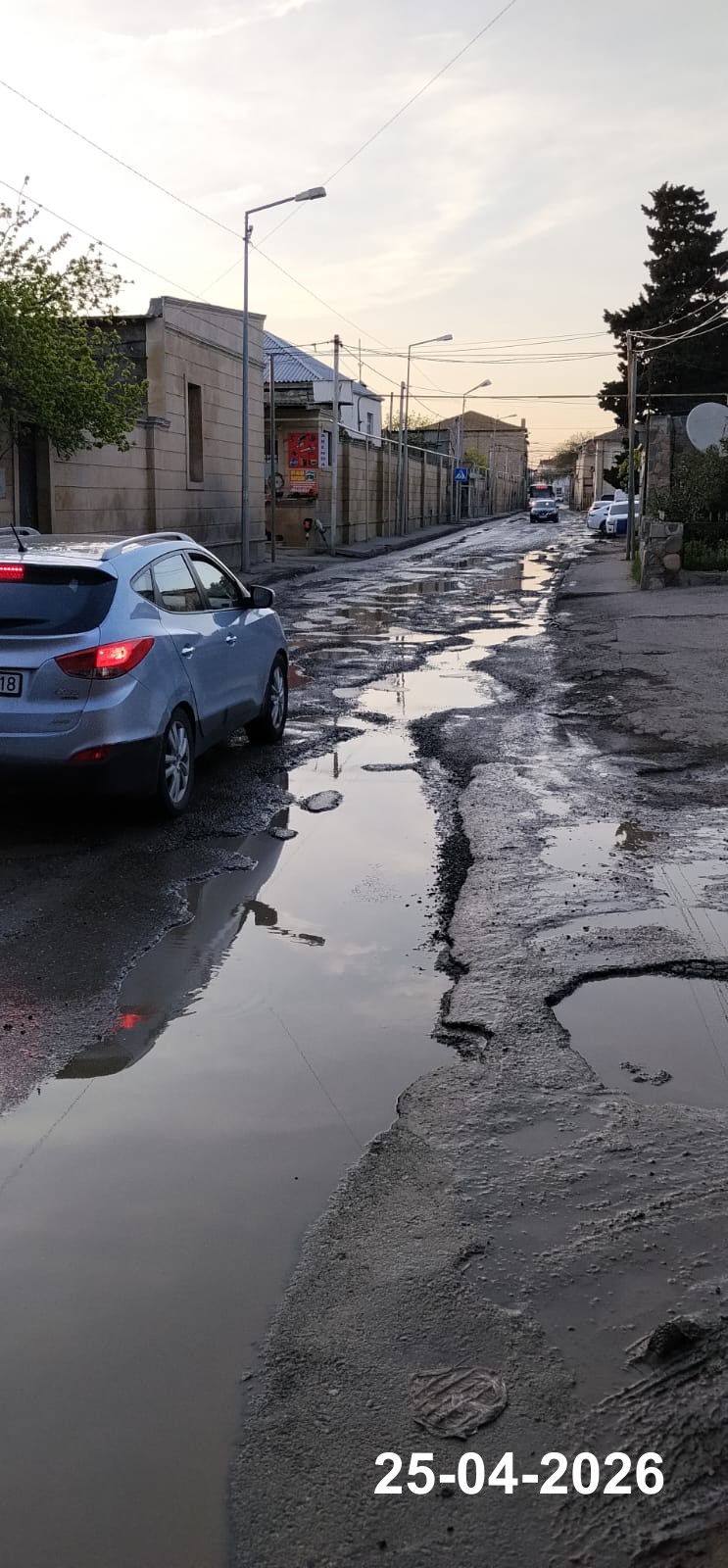
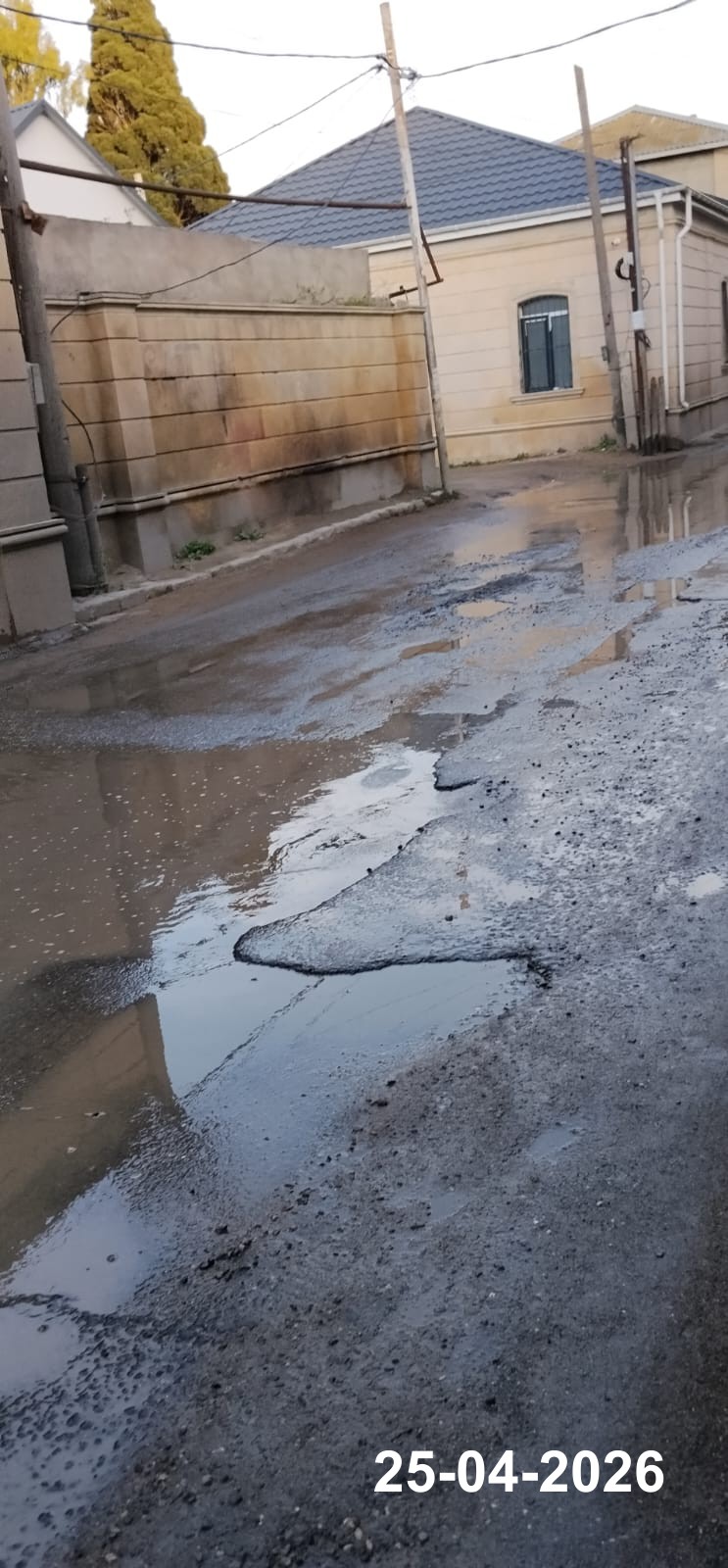
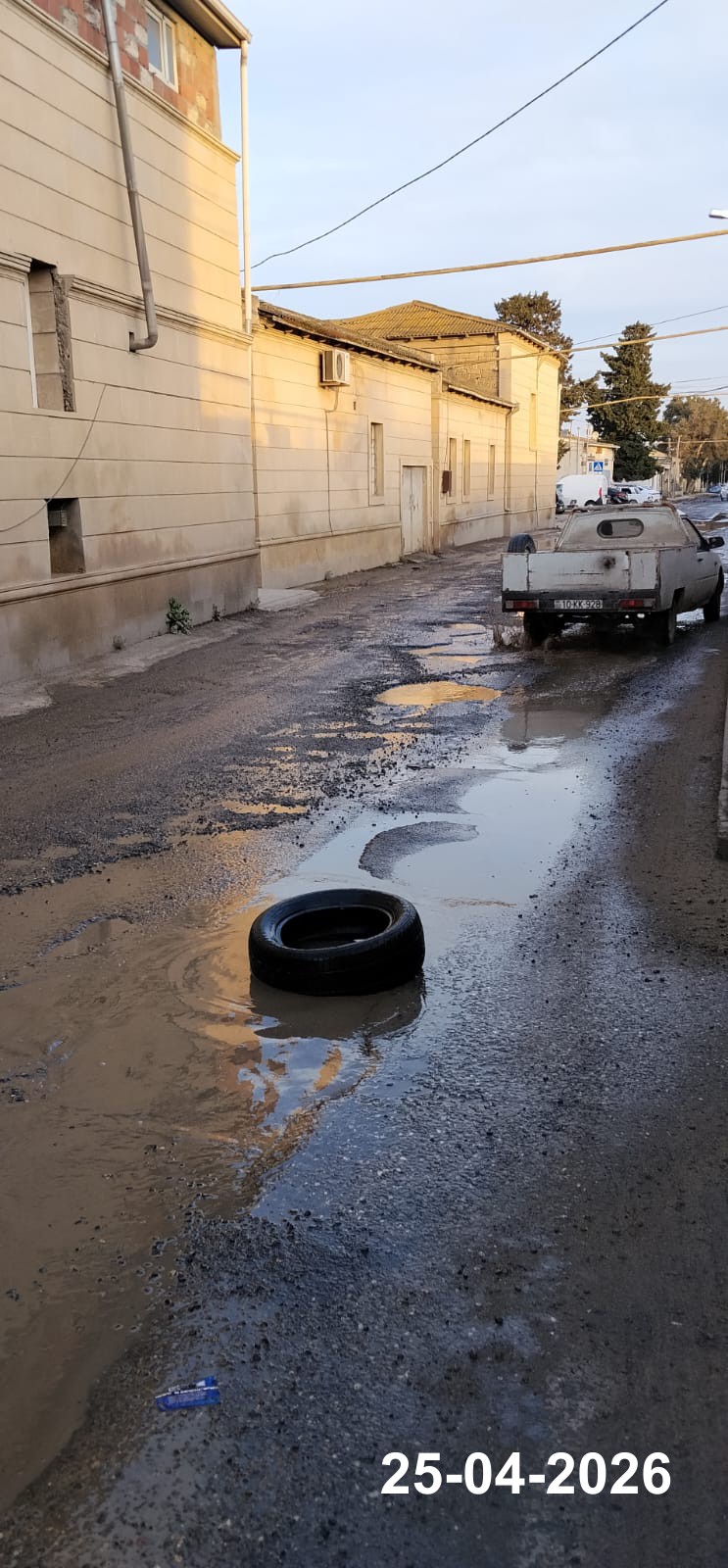
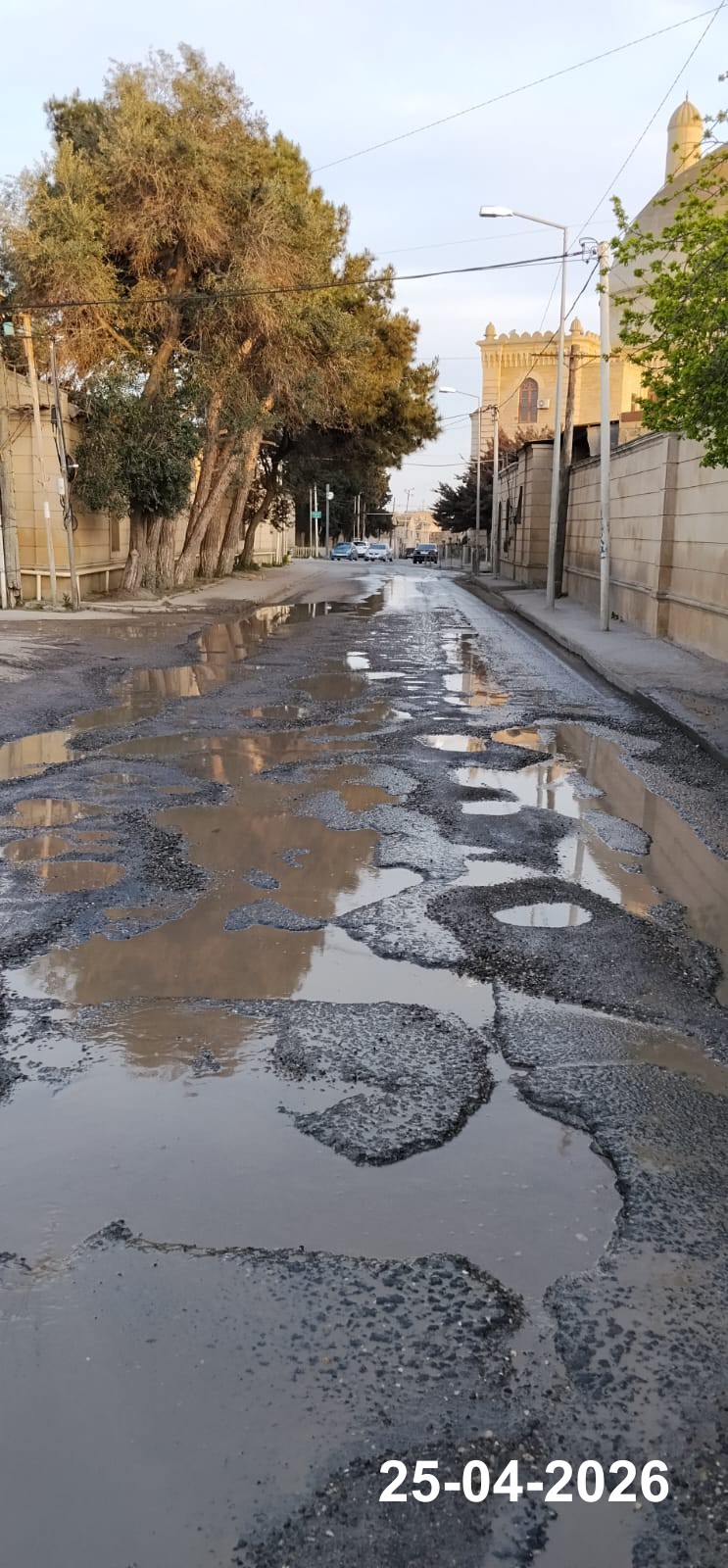
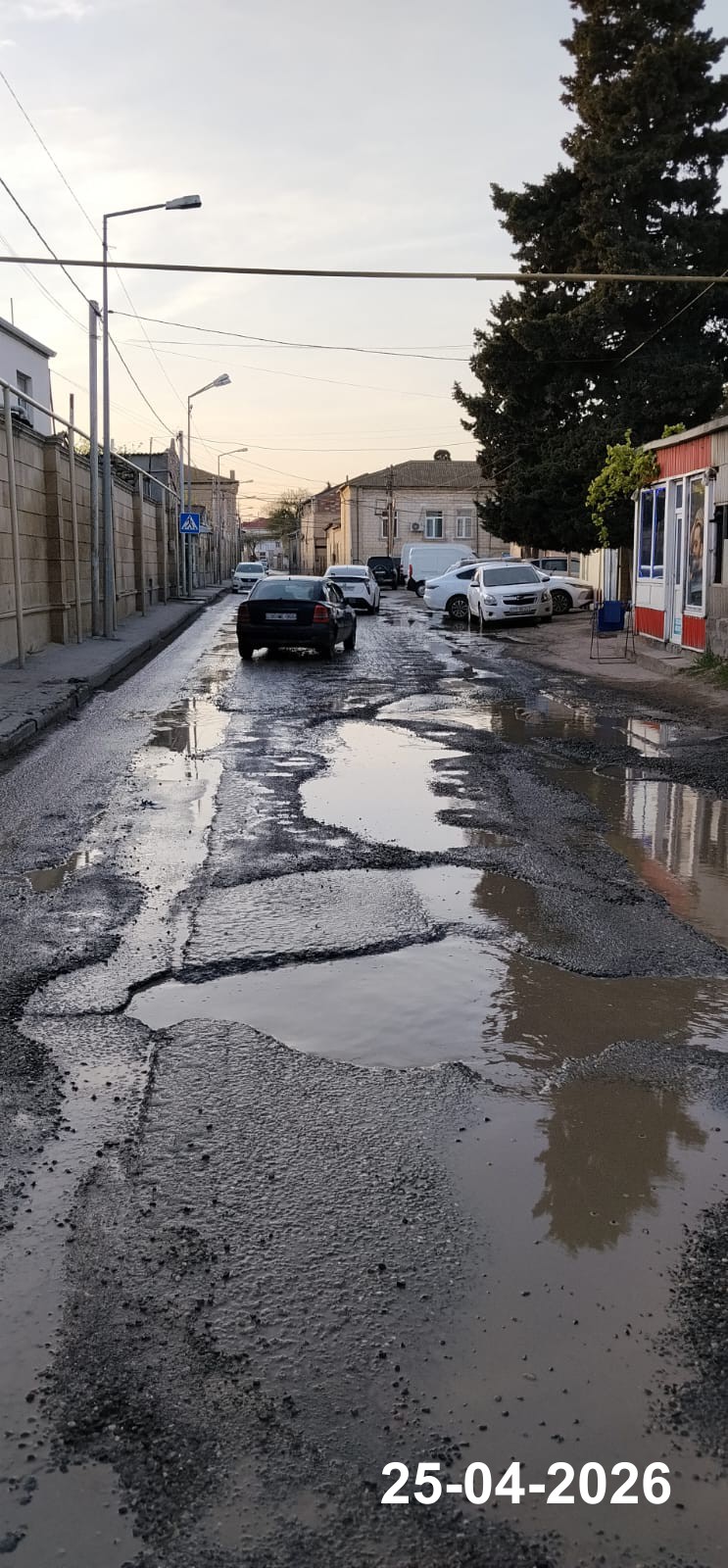
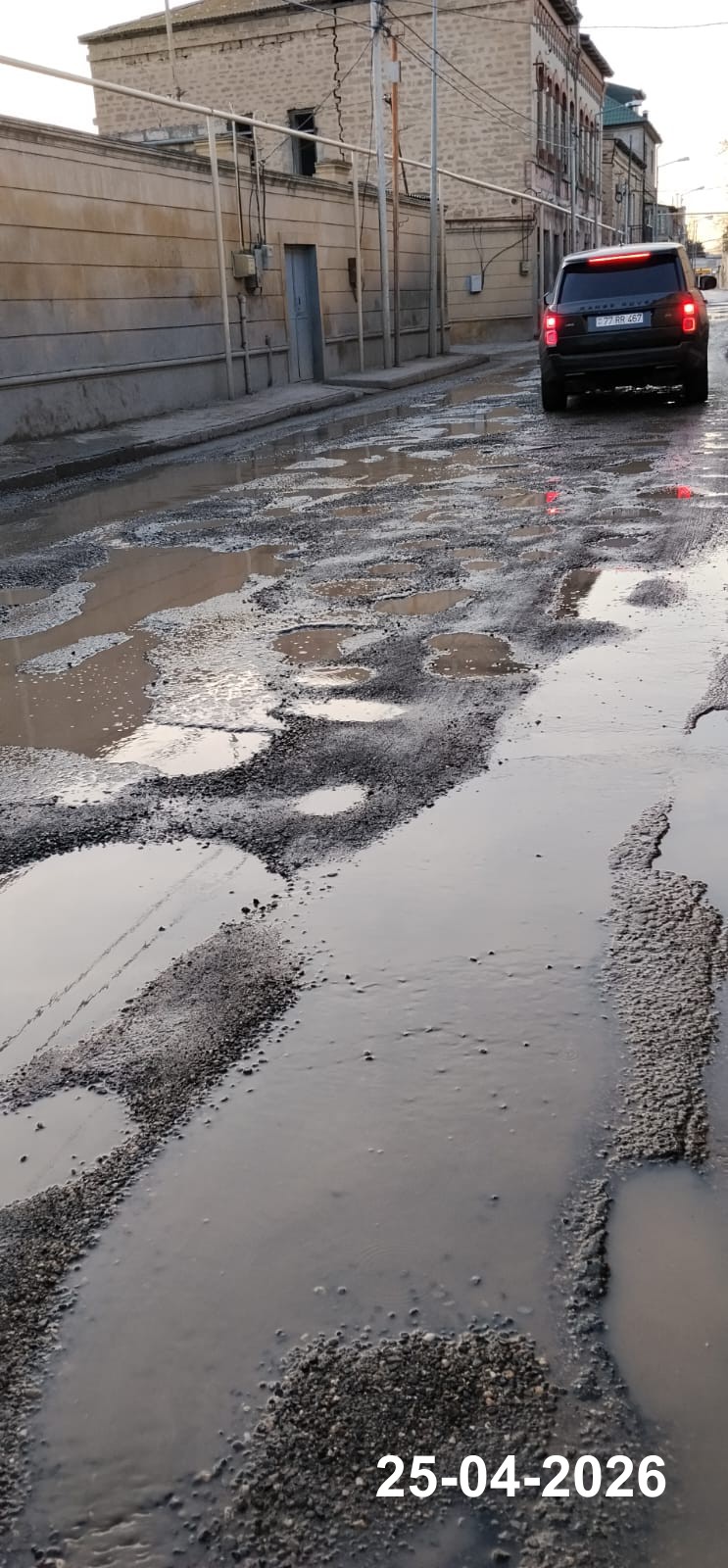
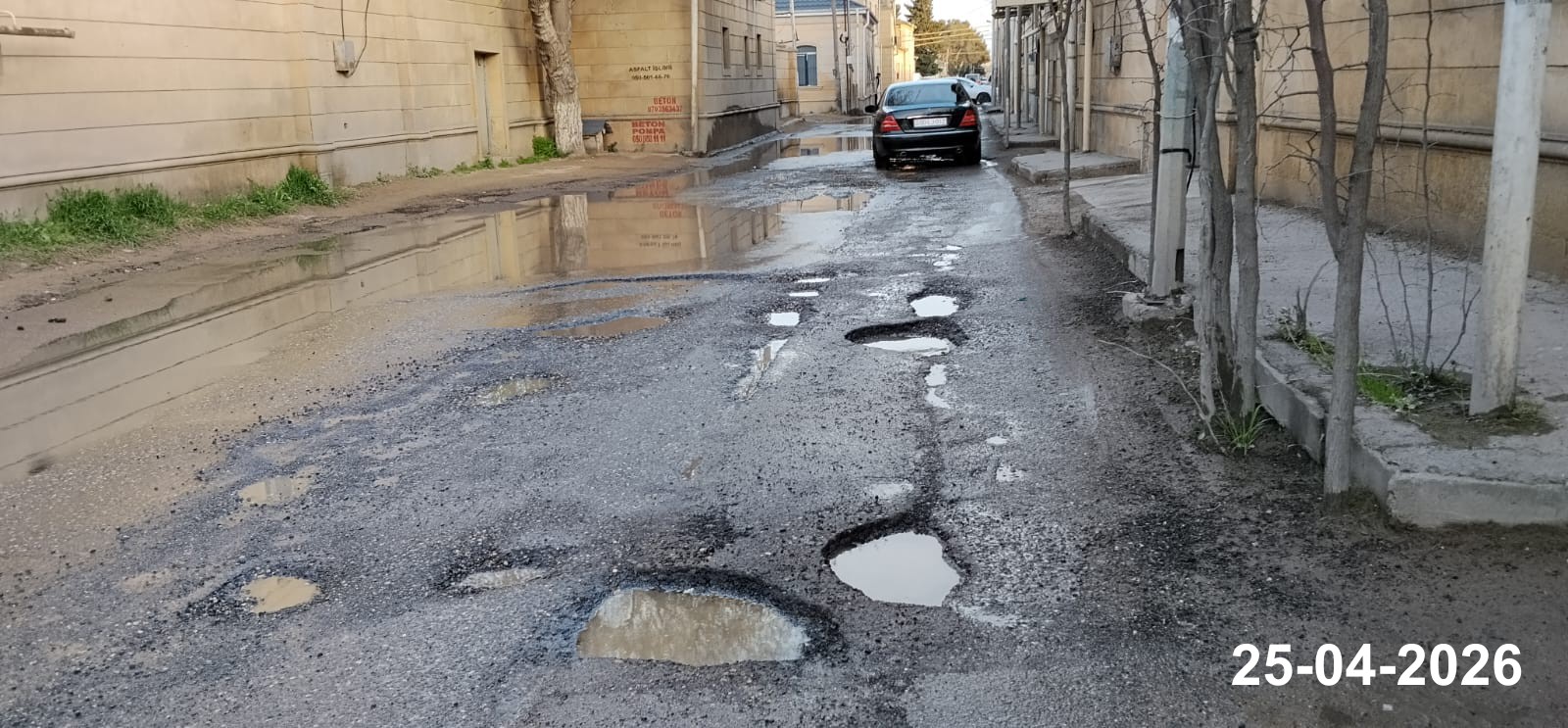
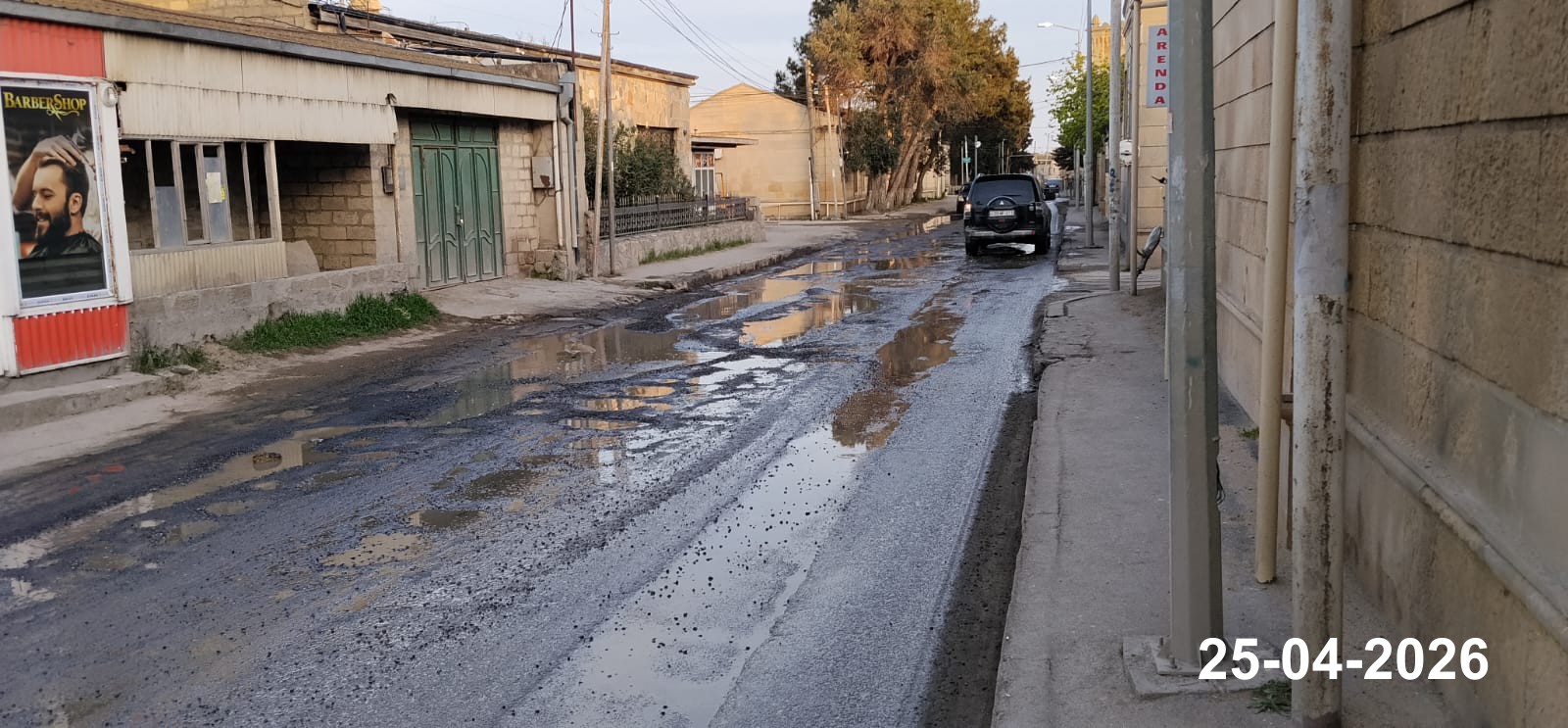
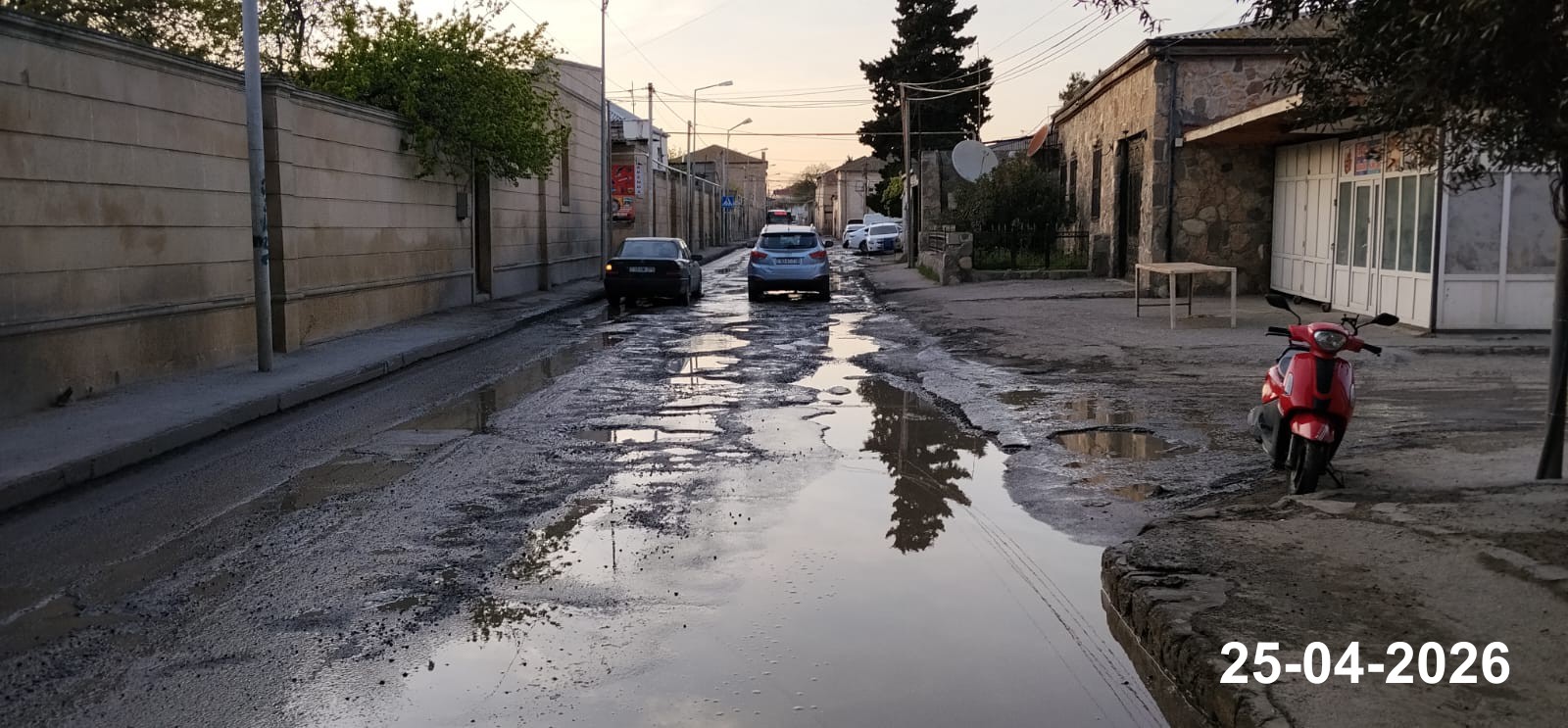
The consequences were predictable. The village infrastructure began to deteriorate. Road sections where sewage and water lines were laid regularly subside. Asphalt pavement is systematically destroyed. At the junction with the main highway, the sewage line deforms due to technical errors and poor-quality work, leading to leaks and soil erosion. Two cars have already fallen into deep pits formed as a result. Several others were damaged.
After recent rainfall, the central road — from Boarding School No. 8 to the Juma Mosque — has effectively become unusable. R. Akhundov Street is flooded around the clock due to a non-functioning drainage system. The road surface is destroyed, and movement is difficult. During the summer, residents are forced to seal manholes themselves, from which a persistent sewage odor spreads — direct evidence of systemic failures in the network.
Against this backdrop, the response of responsible structures remains formal. Observation without intervention has become the dominant model of behavior. Managerial inertia effectively reinforces infrastructure degradation.
Buzovna has never been in such a vulnerable and neglected state.
Executive Authority and “Invisible” Projects: How the System of Informal Approvals Works
When the executive authority claims it was not informed about the construction of the sewage system, it effectively indicates an informal agreement between the заказчик, contractor, and the executive authority itself.
The reason is simple: in the Khazar district, as in other districts, it is impossible to build or implement anything without the consent and approval of the executive authority. The control system over construction has historically been structured so that any work — from private houses to infrastructure projects — passes through an administrative filter.
Personal experience confirms this. In 2014, I attempted to build a house in Dubendi. The project and all required documentation were submitted in full compliance with the law. However, the Khazar district executive authority rejected the project without any justification. Unofficially, it was made clear that without a bribe, permission would not be granted.
This practice was systemic at the time. The key instrument was the so-called permit system for private housing construction, based on vague and ambiguous requirements. This allowed officials to arbitrarily block projects and use administrative barriers as a tool for extracting rent.
Recognition of the scale of the problem led to systemic resistance. As a result, in autumn 2015, the legislation was amended: the permit system was replaced by a notification system. This represented a fundamental shift — from permission to notification of construction start — significantly limiting corruption opportunities.
In subsequent years, attempts were made to restore the previous model, but the system remains largely liberalized. Nevertheless, in practice, executive authorities continue to create administrative barriers for developers.
This is largely due not only to institutional inertia but also to insufficient awareness among citizens of their rights, allowing informal pressure and control mechanisms to persist. Here is the full English translation without сокращений:
A Monopoly Without Transparency: Why the United Water Supply Service of Large Cities Remains an Exception Among State Companies
The United Water Supply Service of Large Cities remains one of the most opaque and controversial organizations among state-owned monopolies such as Azerishiq, Azergaz None of these structures has an equivalent of Order No. 203, which effectively allows the Service to legalize individuals who have illegally connected to the water supply network by registering them as subscribers.
Unauthorized connections to electricity grids, gas pipelines, or communication lines are practically impossible — such actions are promptly suppressed and entail serious consequences. Against this background, the practices in the water supply sector appear to be an exception and call into question the consistency of regulation across infrastructure sectors.
To understand the origins of the problem, it is necessary to return to the early 2000s, when the country faced acute challenges in providing the population with gas and water. Services were delivered irregularly, yet distribution companies continued to accrue significant debts to consumers. These debts accumulated and were later written off at the expense of the state.
This system was based on so-called normative consumption calculations between service providers and consumers. For example, gas consumption was calculated at approximately 30 cubic meters per person per month, and water consumption at around 10 cubic meters. In the absence of meters, the actual volume of consumption remained unknown, creating favorable conditions for abuse.
The situation began to change after a campaign led by non-governmental organizations and media outlets that united in a coalition to protect consumer rights. As a result, a nationwide program for the installation of gas and electricity meters was implemented on the instruction of the president. This significantly increased the transparency of billing and reduced the scale of possible manipulations.
However, the United Water Supply Service of Large Cities remains the only structure that has not fully implemented this directive. The program for the installation of water meters, which was supposed to be completed by 2009 under presidential instruction, has still not been fully realized.
The example of the gas sector is particularly illustrative: the introduction of meters made it possible to reveal the real level of consumption and the scale of previous distortions. If in 2005 approximately 780,000 subscribers, according to Azergaz data, consumed around 3 billion cubic meters of gas, today about 2.5 million subscribers consume a comparable volume. This indicates that previous calculations significantly overstated actual consumption.
The practice of installing meters in the water supply sector also raises additional concerns. According to legislation, the cost of installing metering devices should be borne by the service provider. However, in many cases, the United Water Supply Service of Large Cities shifts these costs onto consumers, forcing them to purchase meters at their own expense. At the same time, there is a risk that these costs may be recorded in the company’s accounts as its own expenditures, creating conditions for double financing.
Thus, the situation in the water supply sector demonstrates a systemic gap between formal regulations and actual practice, as well as persistent institutional risks associated with a lack of transparency and weak accountability.
Information Vacuum
The key problem, as before, remains interaction with state institutions. Despite the formal implementation of the electronic government program, access to information and obtaining responses from state bodies continue to pose serious challenges.
From a legal standpoint, the system appears fully established:
- The Constitution guarantees the fundamental right to submit appeals and receive information.
- The Law “On Citizens’ Appeals” regulates interaction procedures.
- The Law “On Access to Information” establishes the right to obtain data.
- The Law “On Media” defines the rights of mass media.
- The Law on Non-Governmental Organizations ensures the participation of civil society.
- Administrative law provides mechanisms for protection and appeal.
However, in practice, this system functions in a fragmented manner.
All attempts to send electronic appeals to ADSEA proved unsuccessful: the feedback form on the website did not accept submissions. Calls to the hotline also yielded no results. In general, the condition of government websites can be described as critical: they do not meet legal requirements and fail to perform their primary function — ensuring communication between the state and society.
On April 4, official letters were sent to the heads of four state institutions, as well as to the Confederation of Trade Unions of Azerbaijan, outlining the issue related to the illegal sewage project. No response was received.
Previously, obtaining information often required обращения to the courts. However, judicial bodies do not always act as independent arbiters and frequently side with state institutions. Under these conditions, the ombudsman institution remains one of the few relatively оперативных tools of influence, although its effectiveness is limited.
It is precisely the lack of response from state bodies, along with the ongoing deterioration of the situation, that became the direct basis for preparing this material.
And it appears that this story is far from over.
Date: 04.04.2026
No. 1Subject:
On taking legal measures regarding violations of legislation committed during the construction of a sewage line in the Buzovna settlement, the destruction of infrastructure, and environmental pollutionTo the Minister of Ecology and Natural Resources of the Republic of Azerbaijan
Mr. Rashad IsmayilovTo the Chairman of the State Agency of Water Resources of Azerbaijan
Mr. Zaur MikayilovTo the Chairman of the State Committee for Urban Planning and Architecture of the Republic of Azerbaijan
Mr. Anar GuliyevTo the Chairman of the Confederation of Trade Unions of Azerbaijan
Mr. Sahib MammadovTo the Head of the Executive Authority of the Khazar District
Mr. Elshan SalahovDear Sirs,
Based on Article 39 of the Constitution of the Republic of Azerbaijan (the right to live in a healthy environment), Article 57 (the right to appeal), the laws “On Environmental Protection,” “On Environmental Safety,” the Urban Planning and Construction Code, the Water Code, as well as the Law “On Access to Information,” I hereby submit an official appeal regarding the following issues.
In the Buzovna settlement, on Ruhulla Akhundov and Mikhail Lermontov streets, there are observed facts of systematic destruction of road infrastructure. This situation creates a real threat to safe traffic movement and poses a risk to the life and health of citizens.
The collected facts indicate that these issues are directly related to the implementation of a project involving the construction of a sewage line approximately 2.7 kilometers long, which began in the autumn of 2023.
During the implementation of the project, the following violations are presumed:
— violation of the requirements of the Urban Planning and Construction Code;
— failure to conduct an environmental impact assessment;
— violation of approval and permitting procedures;
— concealment of information;
— possible violations in public procurement and tender procedures.Consequences:
— subsidence of the road surface;
— leakage of wastewater;
— environmental pollution;
— violation of citizens’ safety.I request:
To conduct a full review of the legality of the project;
To identify the responsible persons;
To appoint technical and environmental expert examinations;
To eliminate the identified violations;
To restore the infrastructure;
To implement safety measures;
To ensure transparent disclosure of the results.
Additionally, I inform that cases of wastewater discharge have been observed in the coastal zone of Zagulba.
In this regard, I further request:
8. To conduct an independent environmental audit;
9. To immediately stop the discharge of wastewater;
10. To assess the condition of treatment facilities;
11. To ensure disclosure of objective data on water quality;
12. To implement alternative and sustainable technologies;
13. To establish a coordination mechanism among responsible state bodies.The current situation indicates a low level of transparency and weak oversight mechanisms.
Sincerely,
Mehman Aliyev
Director of Turan Analytical Service
Previous articles:
Sewerage, water supply and Illegal pipes
Monument to Corruption: A Rusted Bin in Buzovna Exposes Azerbaijan’s Systemic Failures
The problem is that the government is Executive, not Proactive
Coastal Crisis in Azerbaijan: Hidden Sewage Discharges at Zagulba-Buzovna Beaches
Azerbaijan Marks National Press Day with Sewage Fountain
Is it possible to raise the standards of beach recreation amidst environmental issues?
Environmental crisis in Azerbaijan: sewage scandals and inactivity of state structures
Silence speaks volumes: Azerbaijan's struggle with transparency and accountability
Will Azerbaijani beaches raise "Blue flags"?
Construction of Immoral Water Supply System in Buzovna Accelerated
Construction of "immoral" water pipeline is suspended
Third Lawsuit against Azersu on Turan News Agency's Information Request


Social sphere
-
Museums, as one of the most enduring institutional structures of human civilization, have played an important role throughout history in preserving cultural memory, transmitting knowledge from generation to generation, and shaping public...
-
Why Spending on Children Is Not a Burden on the Budget but an Investment in the Country’s Future While debates continue in Azerbaijan about the need to restore child benefits, Belarus made its choice long ago. In Minsk, support for families with...
-
Under relentless May rain, Baku transformed for six days into the capital of global urbanism. Inside the pavilions of the Olympic Stadium, delegates from 182 countries discussed artificial intelligence, climate resilience, housing, transport, and the future of megacities. Giant screens cycled through presentations of “smart cities,” ministers spoke about green energy, architects promoted the idea of a fair urban environment, and United Nations officials warned of an approaching global housing crisis.
-
Despite the continuing growth of wages, Azerbaijan’s labor market in 2026 is increasingly showing signs of structural inequality typical of resource-based economies, where high incomes are concentrated in a limited number of export-oriented sectors, while a significant share of the population remains in the low-income zone.


Leave a review