


Generated by AI

Baku has always been built as a dialogue between eras—sometimes harmonious, more often tense. Here, the medieval walls of Icherisheher stand just minutes away from the flowing forms of the Heydar Aliyev Center, designed by Zaha Hadid. This is a city that does not so much grow as accumulate—like a geological cross-section in which each layer speaks of power, money, and visions of the future.
In ten years, Baku will likely become an even more complex text. But its meaning, as before, will depend on who is writing it.
Stone, Oil, and Power: Architecture as the Language of Eras
The history of Baku is a history of architectural gestures.
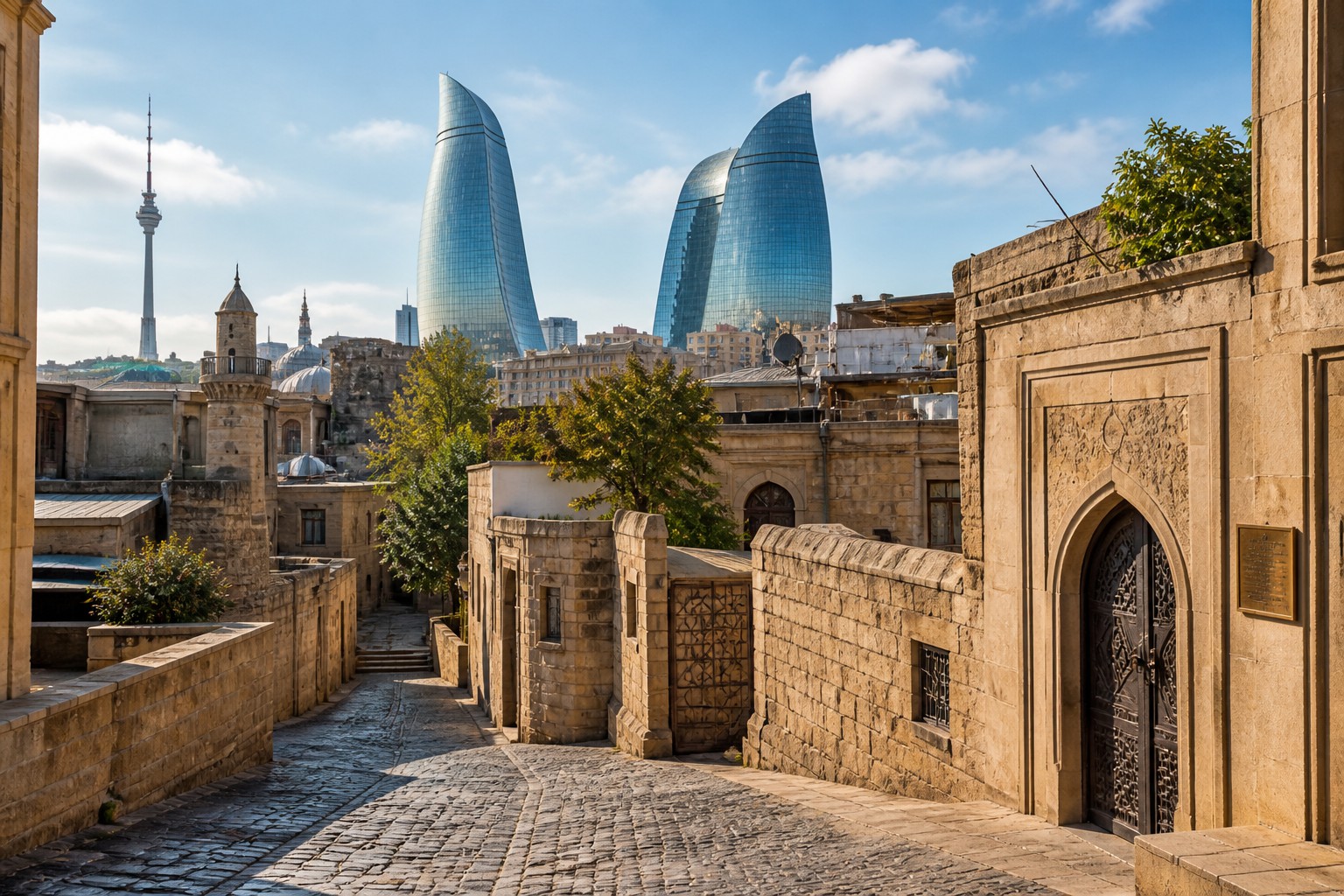
In Icherisheher, the city was a fortress: compact, protected, inward-looking. Narrow streets and thick walls did not merely reflect technological limitations—they shaped a way of life in which security mattered more than space.
The oil boom of the late 19th and early 20th centuries changed this language. The city began to speak in a European idiom: mansions of Baku’s oil barons, façades in Art Nouveau and Neo-Renaissance styles, wide boulevards. For the first time, Baku became a showcase of wealth.
The Soviet period added another layer—functional and ideological. Microdistricts, broad avenues, administrative buildings: architecture became a tool of governance rather than self-expression.
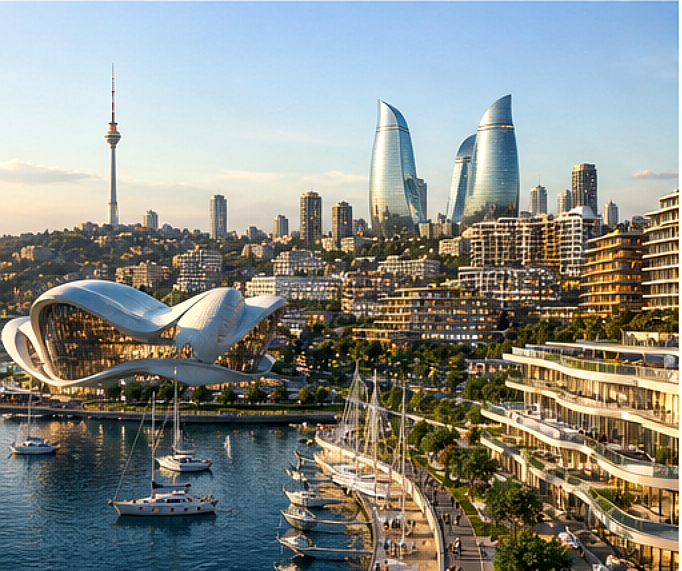
After independence, the city shifted tone once again. Landmark projects such as the Flame Towers emerged—not merely buildings, but symbols of a new identity seeking visibility on the global stage.
Strategy as an Attempt to Bring Order to the Chaos of Growth
Today’s Baku is the result of accelerated development, where market logic has often outpaced planning. The new master plan to 2040 is an attempt to rebalance this dynamic.
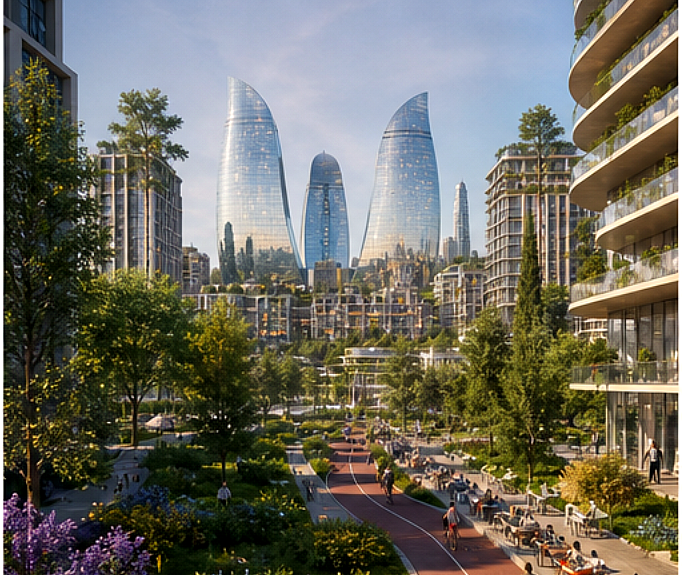
Its central idea is a transition from a centralized city to a polycentric structure.
This means that the Baku of the future will not be a single dense core, but a system of districts with their own functions—business, residential, and cultural.
In practice, it is an attempt to solve an old problem: the city is growing faster than its infrastructure.
Transport as a Political Question
In Baku, transport is not merely about movement—it reflects the social order. Traffic congestion is not only the result of rising car ownership, but also of spatial inequality: people are forced to cross the city daily in search of work and services.
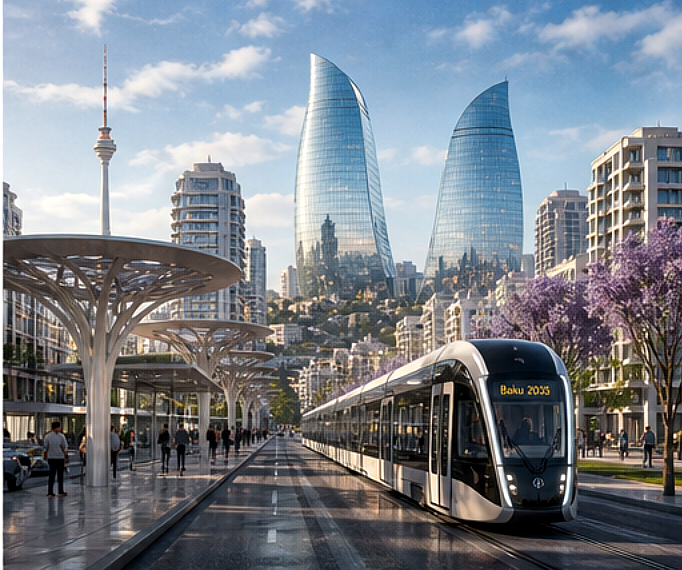
The expansion of the Baku Metro, the return of trams, and the development of suburban rail are meant to change this model.
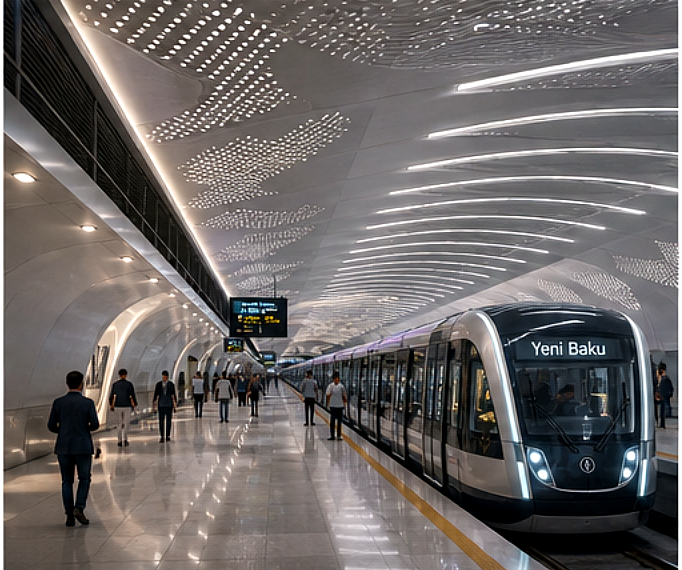
But transport reform is always more than infrastructure.
It is a question of where people live—and where they can afford to live.
The Green Turn: Climate as a New Reality
Historically, Baku has been a city of wind and stone.
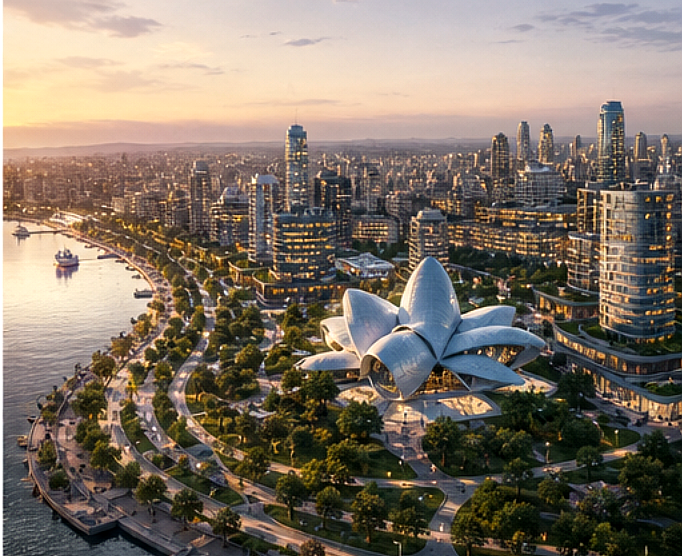
In ten years, it is expected to become a city of shade and water.
The development strategy includes expanding parks, creating green corridors, and integrating natural elements into the urban fabric. This is no longer a matter of aesthetics, but of adapting to a climate that is becoming increasingly harsh.
Yet a paradox emerges: the more expensive the city becomes, the harder it is to preserve accessible public space.
The Digital City: Control or Convenience
The future Baku will be not only physical, but digital. The management of transport, utilities, and security is gradually shifting to automated systems.
This promises efficiency.
But it also strengthens control.
A city that “knows” everything about its residents inevitably reshapes the relationship between the state and society. The question is whether this system will serve citizens—or primarily the logic of governance.
A City Growing Beyond Its Borders
In ten years, Baku will effectively become an agglomeration, incorporating Sumgayit and the surrounding Absheron districts.
This will change the very definition of the city:
boundaries will matter less than connections.
But with this come increased risks—from environmental pressure to infrastructural strain.
Between Future and Past
Baku’s central dilemma is not new: how to modernize without losing itself.
History shows that the city has repeatedly chosen rapid transformation—sometimes at the cost of architectural and social heritage. In ten years, this choice will become even more acute.
Baku may become a sustainable and balanced city where technology serves people, or a showcase of development where old inequalities persist behind the façade of modernization.
Most likely, it will be something in between.
And perhaps that is its true nature: a city that is never finished and is always negotiating between its past and its future.


Social
-
Road traffic in central Buzovna is still being shaped by the consequences of an accident that has formally been addressed. The groundwater leak has been stopped, but the damaged road has not been restored. For nearly a month, buses and cars have...
-
Behind the high stone wall of an ordinary private home in Buzovna stand several ancient gravestones. They are not part of a decorative garden, nor were they moved there by archaeologists. The house simply happened to be built on the site of an old...
-
The participation of Armenian wrestlers in the U17 World Championships will test whether the cautious political dialogue between the two countries can move beyond negotiating rooms. If one of Armenia’s young wrestlers climbs to the top of the podium...
-
“Ali Ayaghi” in Buzovna: A Shrine, a Legend, and the Forgotten History of Absheron History on the Absheron Peninsula rarely lies on the surface. It hides beneath later buildings and survives in the names of neighbourhoods, ancient cemeteries, wells,...


Leave a review